
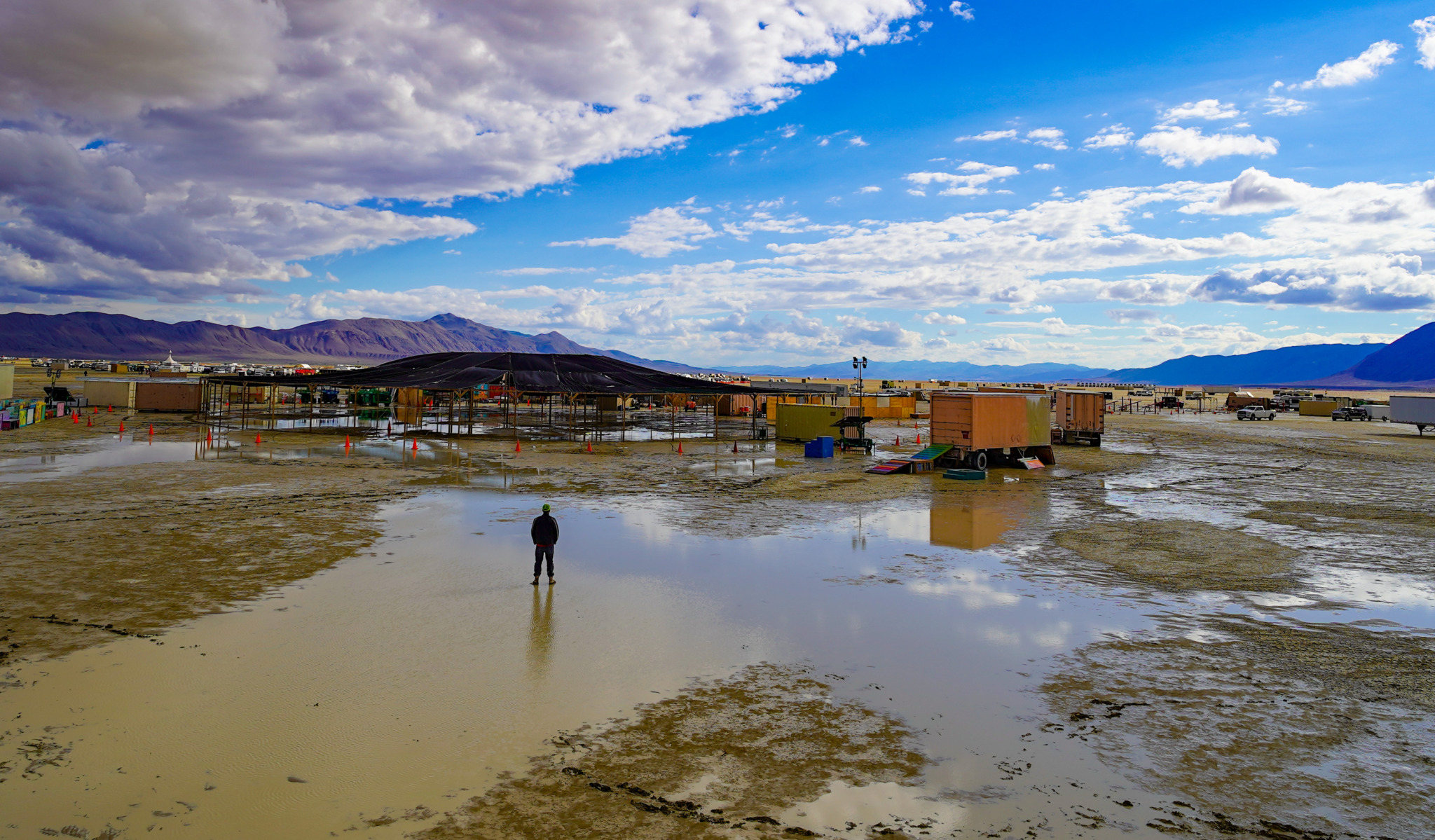
Around midnight on August 20, the Hurricane Hilary-inspired rains came. By morning the water was ankle deep in Center Camp. The wind blew ripples across the ponds and the sun did not shine for 36 hours. The roads were closed and the early arrival inhabitants huddled in their surviving dwellings.
Next came the sucking sounds; sounds of your feet being consumed. Playa mud is the worst mud. Playa mud is angry. It aspires to be quicksand, but it is not quite deep enough. It can only eat shoes and tires.
The best way to get around on foot seemed to be eschewing shoes in favor of tightly secured plastic bags. The mud, angered by not being able to eat shoes, turned slippery and big splashes could be heard. A flop in the warm mud might sound like a spa experience, until you realize there is not enough water in Pershing County to remove said mud.
Playa mud also does not want you to drive. It does not care if you have two, four or nine-wheel drive; you are not going anywhere. Either your wheel wells will fill up with a donut of collected mud or you will spin-dig holes to your axels.
Fun fact: This happens even in the summer when the mud lurks under an alluring dry cracked surface daring you to cross it. I took the dare at one of the 4th of Juplya celebrations. I subsequently sat there for 26 hours until someone more sensible and experienced pulled me to solid land. Lesson learned, mud respected.
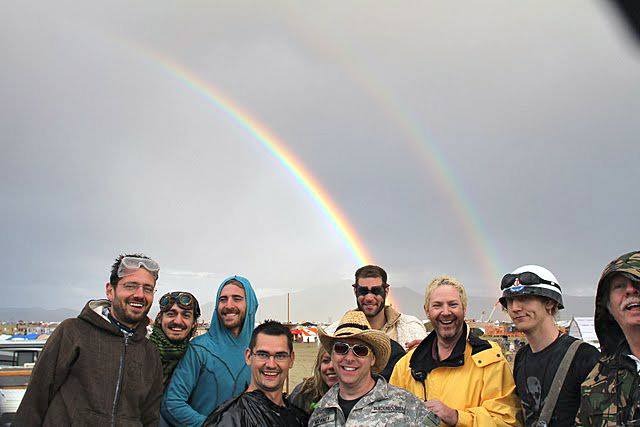
Savvy Burner veterans remembered the great rain storm of 2014. I recall that most of the structures and theme camps had already been built. The roads were closed but we were mostly happy. I have a photo of my crew posing in front of a double rainbow on our container deck.
The 2023 water world was different. This time the rain lasted much longer and put a stop to everyone’s build schedule. Hundreds of shade structure post holes sat waiting for their posts. They were instead filled with water, creating a thick brown soup. Playa mud is also impervious to augers; they just spun like a blender. The only solution was the tiresome process of pulling the muck out with hand-operated post hole diggers. The shade structures that were completed not only failed to keep the water out but also only served to keep the mud-drying sun out.
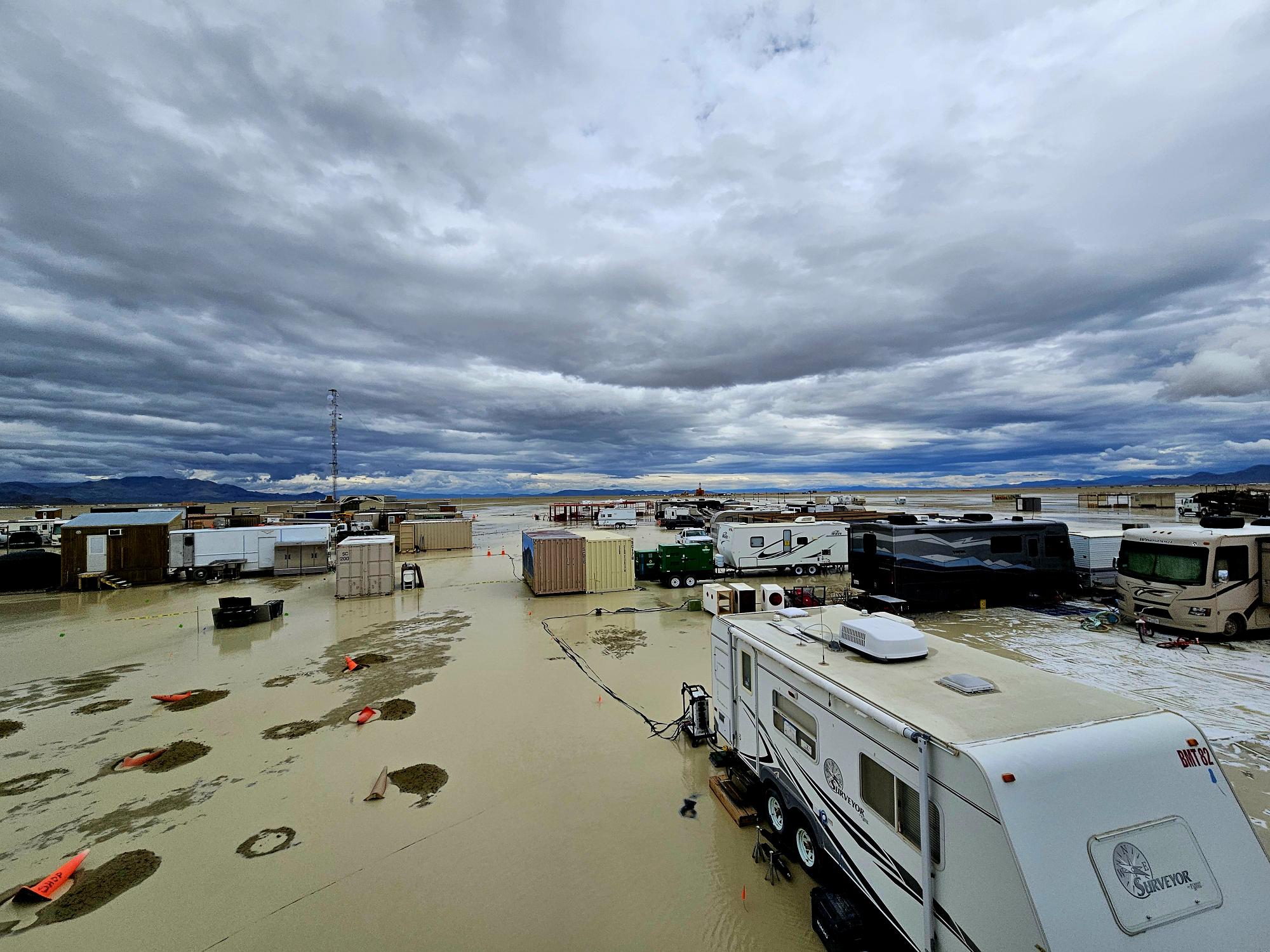
Like one of the many planet covering water allegories, the sun shone, the birds flew and the waters receded. Trailer and tent-bound survivors quickly spotted small islands of dry land. Gradually people came out and rejoiced on their islands. Shared food and drink sustained us. Animals crawled up on shore, traded their fins for legs, stood upright and continued their construction. The playa mud had exacted its price and now let us roam free the rest of Build Week.
We gathered around fires and talked of the “before times.” Six days after the great splashing, it had all become an embellished myth with wild exaggeration, heroic stories to be shared with new arrivals to the playa scape. Some will claim it was epic.
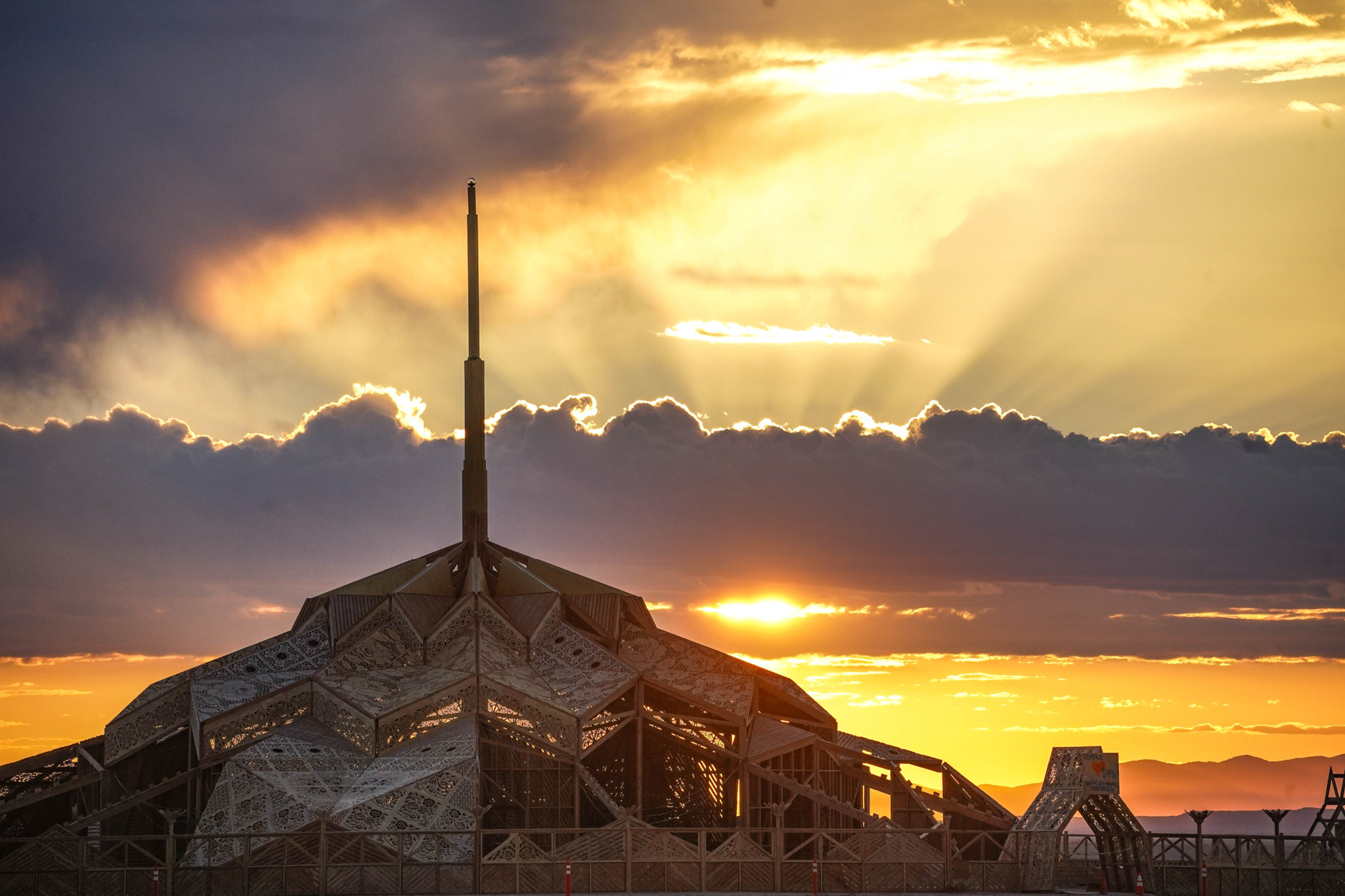
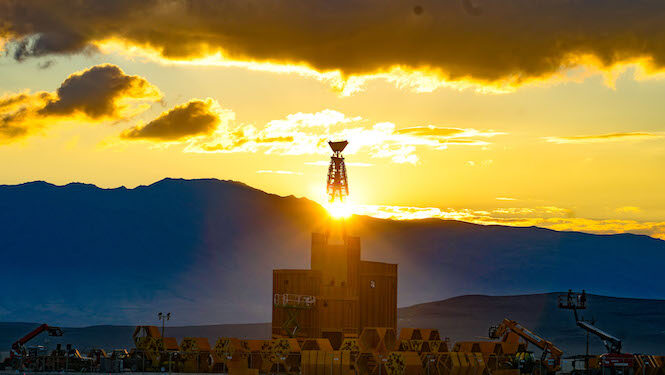
Cover image of “The Hive” by Tim Bremner, 2023 (Photo by Dennis Hinkamp)
Beautifully written
“Mud mecca”…words that embrace the vibe on several levels
Report comment
The “rain gods” could care less about you! Come to the one true God who created you and loves you beyond comprehension. “On Christ the solid rock I stand, all other ground is sinking sand.”
Report comment
Really? you came to the BM Journal for this?
Report comment
Religion comments are everywhere, I am slowly getting used to it. Can’t fight it.
Report comment
You have Ten Commandments, we have ten “core principles”.
You have Jesus, we have “The Man” watching over us.
You have the love of Christ for all… as long as the rules are obeyed. We have endless hugs unless you are not like us.
We are not a cult, you are, so there!
Report comment
NEXT YEAR, ALL HAIL…
Report comment
Thanks for the recap. It’s been since 2000 that I went to a burn, but I remember the rains of 1995. We all discovered the ooziness of wet playa and how thin the mud layer really was.
Then the Sharkbait guys started drumming and we all converged on their camp, which became the first mud party and attempted Slip and Slide. Unbelievable, sensuous experience and we did learn a bit about shoes caking up.
But nothing like this. I guess we were lucky.
Report comment
Excellent article. Fun to read. Being career military, rain, mud and darkness I can relate to. LOL
Report comment
Too many Gods to atone out here.
Report comment
how so?
Report comment
You have your rain Gods, let’s not pretend there is only one. Then you have your dust Gods and Sun Gods and blazing heat Gods, mud Gods, portapotty Gods, travel Gods, BLM Gods, missing bike Gods and let we not forget the Gods of lubricants that bless Orgy Camp and keep them too busy to crash into my camp ( true story).
There are so many Gods and so few Goddesses being recognized. You have the Goddess of thigh high platform boots on bumpy playa and the Goddess of
critical tits on a bumpy playa. The Goddess of Abundance providing 45,000 middle age men in leather vests and curly cowboy hats to dance with even if you thought you were dancing alone.
I worship only the Lords of satire and sarcasm, snark and what was the other thing? God help me remember the punch line. I swear to God it was funny. Well anyway it was very funny and addressed how cool I am.
Report comment
This is a superb article. A joy to read. As a veteran, I’m used to the elements, so the rain, mud, and nighttime are all familiar to me.
Report comment
If it rains next year like this I will welcome it, it kept the dust down the temperatures were cool and the experiences were exceptional and special. I’m also going to come with a few extra little bits of gear and some experience from the 8/20 dousing and the event week dousing.
Report comment
Comments are closed.