

On any given night inside a makerspace, something is taking shape.
A welding torch sparks in one corner. Across the room, someone is hunched over a laptop, translating an idea into a digital model. A stranger walks in with no experience and, within hours, is sanding, cutting, building and being part of something larger than themselves.
Burning Man and the global maker movement are inextricably intertwined. Both welcome beginners and experts alike, while fostering a communal, hands-on approach to building tangible objects that become works of art, helpful structures, and engineered wonders.
We are living through an epidemic of disconnection… The hunger for genuine human contact doesn’t go away; it just gets louder. Burning Man and the community built through makerspaces offer something different: a place where people spend an entire year not tearing things down, but building them. Not hiding the worst of themselves, but showing off the best.
Where Big Ideas Actually Get Built
Makerspaces have emerged as third places, somewhere between home and work. The global maker movement, turbocharged by decades of Burning Man culture, is quietly bringing strangers together to learn, build, and care about each other.
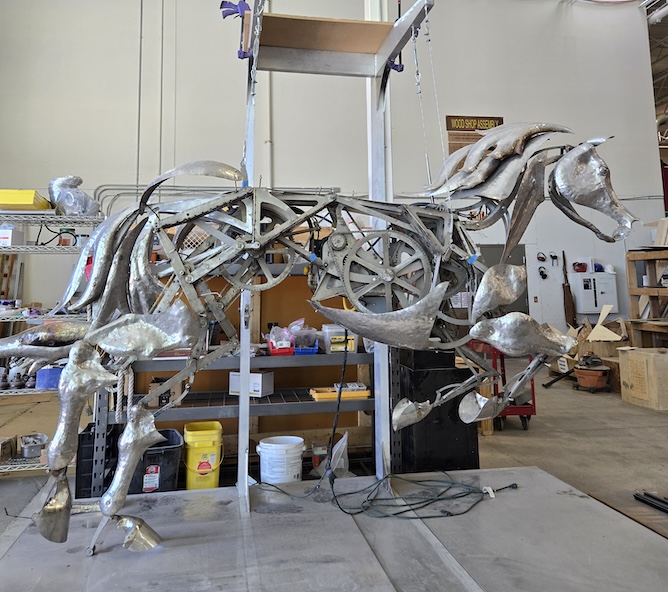
Few places better embody the symbiotic relationship between Burners and makers than The Reno Generator, the largest makerspace in the United States, and one of the most important pipelines for art on the playa. The Generator boasts 60,000 square feet, hundreds of members, and dozens of studio artists. Every year, international art crews pass through its doors, many who begin their projects at home, then complete their builds in Reno before bringing them to Black Rock City.
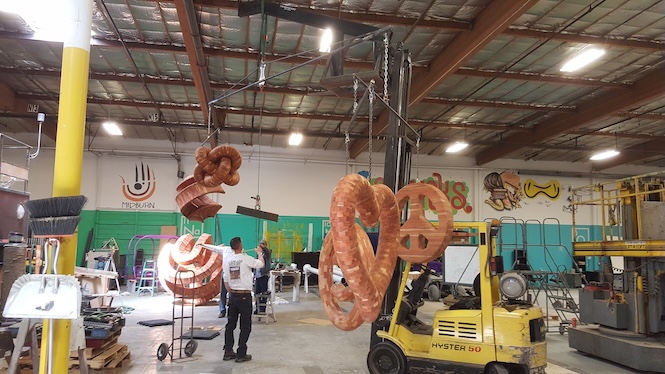
“There was one year when I could stand in open playa, spin a 360, and count 12 projects that I knew came from The Generator,” said artist Andy ‘LostMachine’ Tibbetts, who has been involved with the space since 2014.
Through Burning Man, Tibbets acquired a different understanding of scale — both physical and human. “I wanted to build big things, but there wasn’t a space for it,” he said. “When I went to the Burn in 2004, it blew my mind as to what was possible.”
Since then, he’s helped bring that possibility to life through numerous playa installations and mutant vehicles, including “The End of Time,” a whimsical clock created by Tibbets and Andrea Greenlees that rose in Black Rock City 2024, and “The Space Whale” by Matthew Schultz and The Pier Group, now a permanent fixture in downtown Reno.
But for Tibbets, the real reward isn’t the finished product.
“It’s not passive entertainment,” he said. “You’re engaged. You’re thinking about the steps to take, logistics involved, and to be able to do that as entertainment is so fulfilling.”
Then comes the line that defines the divide: He paused, then added something that cuts to the core of the maker spirit:
“I recently interacted with people who just came to Burning Man for the party. They said they felt bad for me because I had to work. I was very polite, but I thought then, and many times since, that my experience was much richer.”
The Intentional Architecture of Community
There’s a vision gaining traction among urban thinkers: just as we built roads for cars, we can build infrastructure for people — spaces designed for the messy, beautiful work of belonging.
Co-founder Jerry Snyder built The Generator inspired by one question: what if anyone could walk in and start building? Founded in 2013, its influence reaches far beyond Burning Man, welcoming everyone from professional fabricators to families building birdhouses.
“We accept people for who they are,” Snyder said. “We live in a big, complicated machine where we don’t have contact with our material world. But on the playa, we have a chance to play house in every aspect of our lives. It’s how we claim agency.”
“This is like the movie Ratatouille,” Snyder added. “A good cook can come from anywhere. You lower the barriers of entry for people who have the talent but not the opportunity — you never know where the next genius is coming from.”
A Global Network of Makers
That same spirit has taken root far beyond the United States.
In Newcastle, Australia, Sparkhaus, a Burner-run makerspace founded by Leanna Pugliese, grew out of a theme camp that simply ran out of room. “With a lot of Burner spunk and a couple grants, we became residents of an experimental artist collective,” she said. It soon became a creative hub, hosting Regional Event builds, an art gallery, and repair cafe.
For Pugliese, the value of a makerspace isn’t just the tools, it’s the people. “Our greatest asset is our brain trust,” she said. “Being part of something bigger than yourself and creating with a whole bunch of other creatives with different skill sets… that’s where the magic happens.”
“It’s given me the courage to step into my adult skin,” she said. “We’re doing great things because we’re passionate about it, and that’s contagious.”
That’s the quiet miracle of these spaces. Anyone can walk in and leave with a new skill, new friends, and maybe a better understanding of oneself.

Why It Matters
For some, the impact of Burning Man and the maker movement can feel hard to quantify. After all, much of what’s built on the playa serves no immediate practical purpose.
And yet — “As a maker, you don’t just see a massive wooden ship,” said Generator artist Mike Lautman. “You see the hours of construction, the logistical nightmare… the blood, sweat, and tears of the team.”
In an age of algorithmic feeds and everything optimized for engagement, there is something revolutionary about a project that asks you to show up in person, work with your hands, and depend on the person next to you.
“Being a maker changed my views on intrinsic energy, motivation, and burnout,” Lautman observed. “When I’m building something, I can work insane hours for months or years and not burn out. When you’re doing work that drives you instead of driving yourself to do the work, it’s a completely different thing.”
What If We Built Differently?
Black Rock City may only exist for a week. But what’s built there begins months or years earlier — in backyards, in warehouses, in makerspaces in Reno and Newcastle and everywhere in between, where people who didn’t know each other yet are already bending metal and wood into something that says: we were here, we made this, and we made it together.
It’s a reminder, however temporary, that another version of the world is possible. One where people don’t just consume experiences, but create them. Where communities form around curiosity rather than convenience.
Come find your crew. Bring your ideas. The forge is open.
Cover photo: A crew at The Reno Generator works on “The End of Time” by Andrea Greenlees and Andy ‘LostMachine’ Tibbetts (Photo courtesy of The Reno Generator)

Culture is ever evolving. It makes sense to share space, tools, and above all, experience. Encouragement too! Many community colleges teach welding, and many colleges and even public libraries have maker spaces for large and small works. DIY electronics and coding for art projects are thriving. DIY and maker can include all ages.
Local burner communities share work and tools too, peer-to-peer.
In our area, we have a project for female-identified and diverse individuals to learn and build LED art and outfit accessories.
Each person brings their own creativity, so the more people we include, the more possibilities for breakthroughs and new directions.
Have a burning event project, an art project, or a home repair project? Ask around your Burning Man Regional community.
Report comment
Comments are closed.